The Mass Grave at Wounded Knee, South Dakota
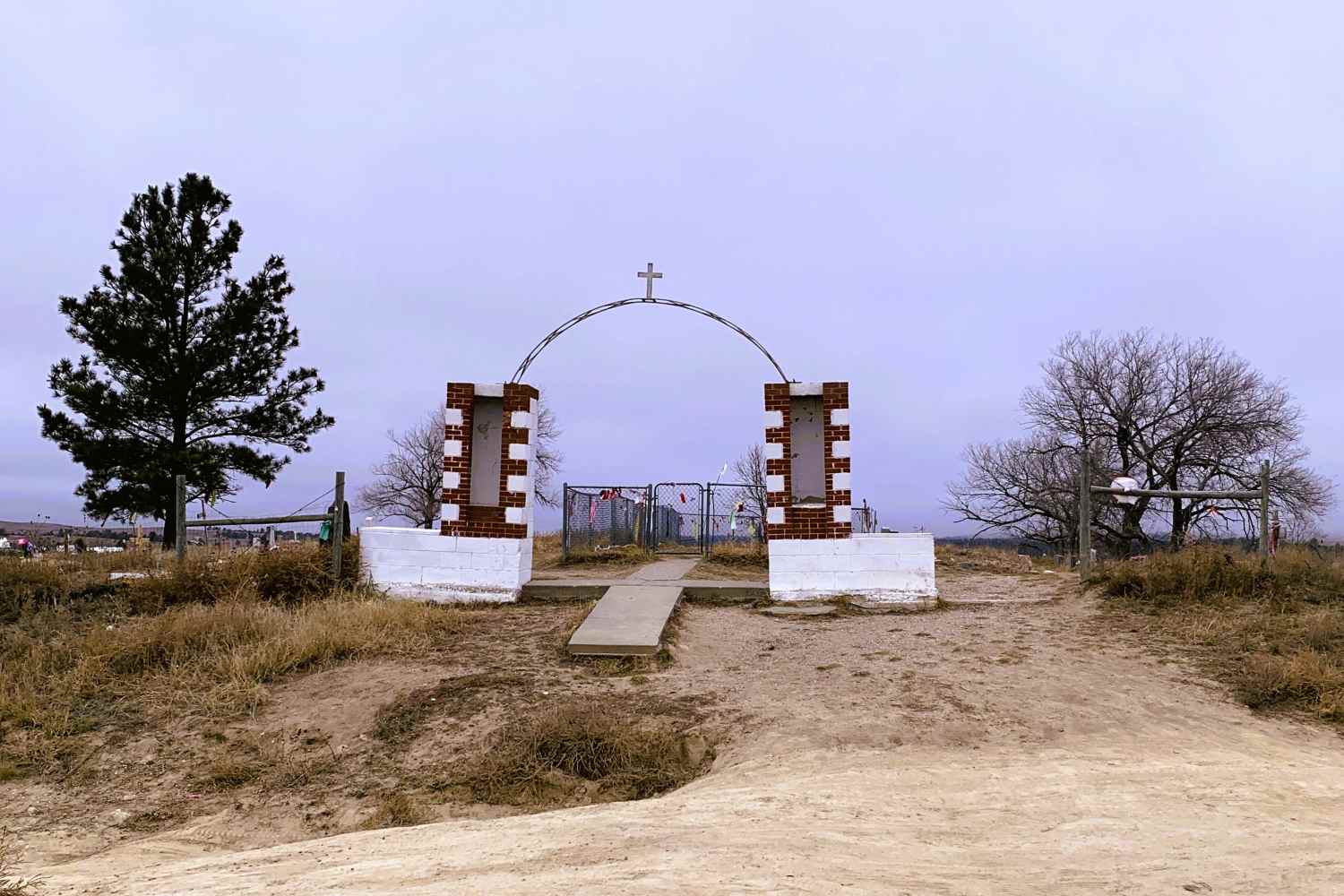
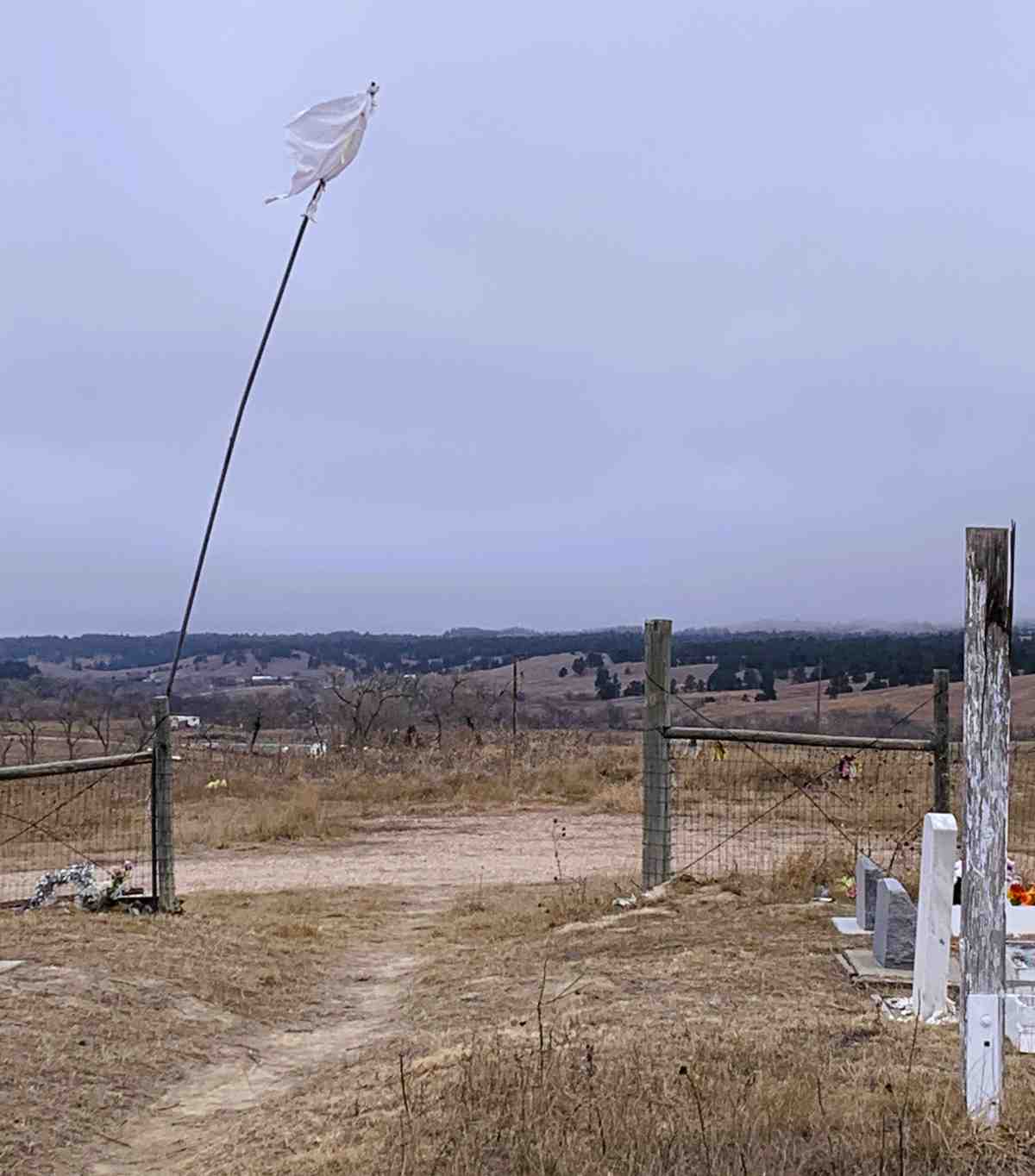
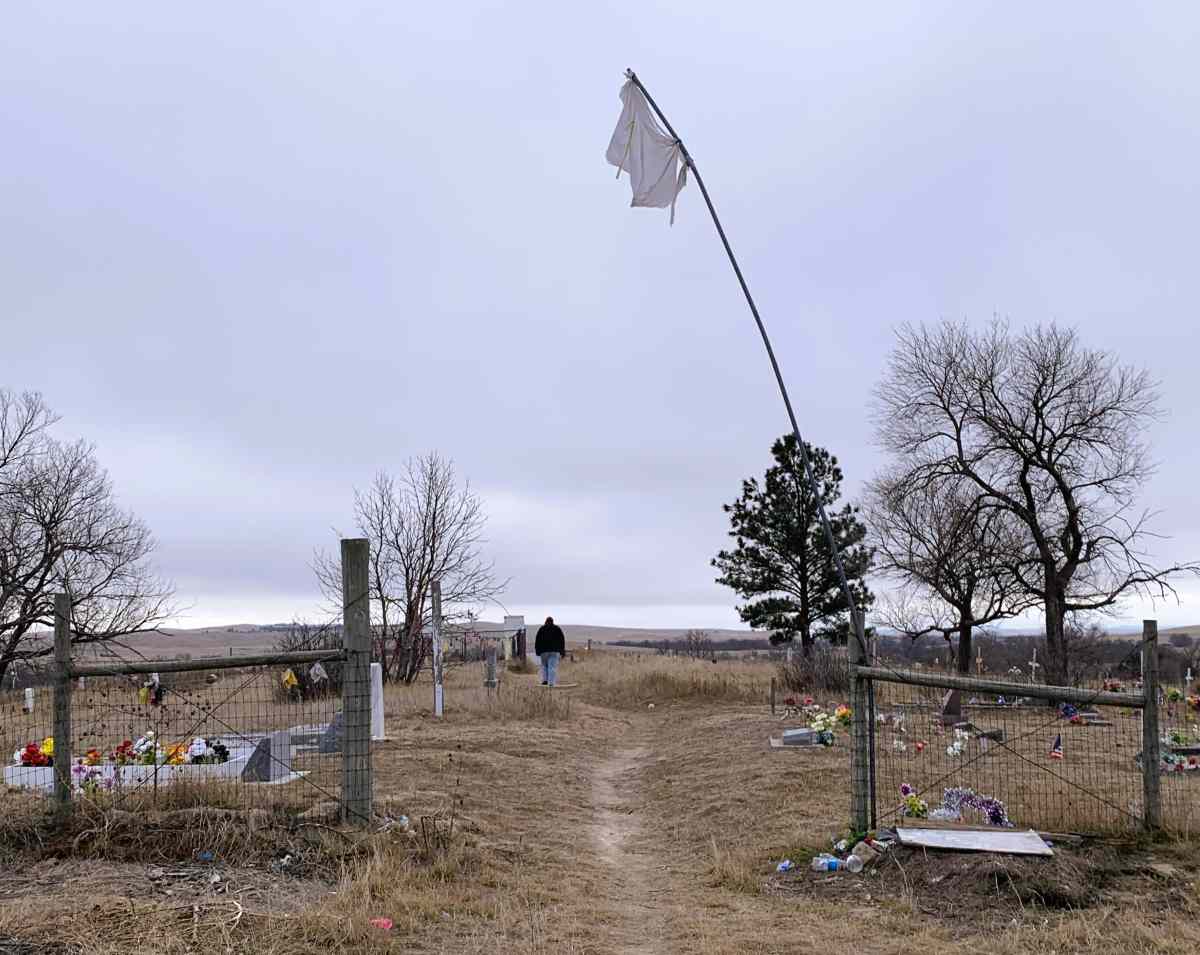
Entrance. The site is owned by private individuals and the Sioux tribe.
This monument was erected by family members in 1903

A few of the names:
Chief Big Foot, Mr. High Hawk, White American, Black Coyote, Mr. Shading Bear, Ghost Horse, Living Bear, Afraid of Bear, Young Afraid of Bear, Yellow Robe, Wounded Hand, Pretty Hawk, Scatters Them, Sherman Horn Cloud.
Chief Big Foot, also known as Spotted Elk, became chief after his father Chief Lone Horn died. He was a popular leader who did a lot of good things for both Indians and White people. The battle is also known as The Chief Big Foot Massacre.
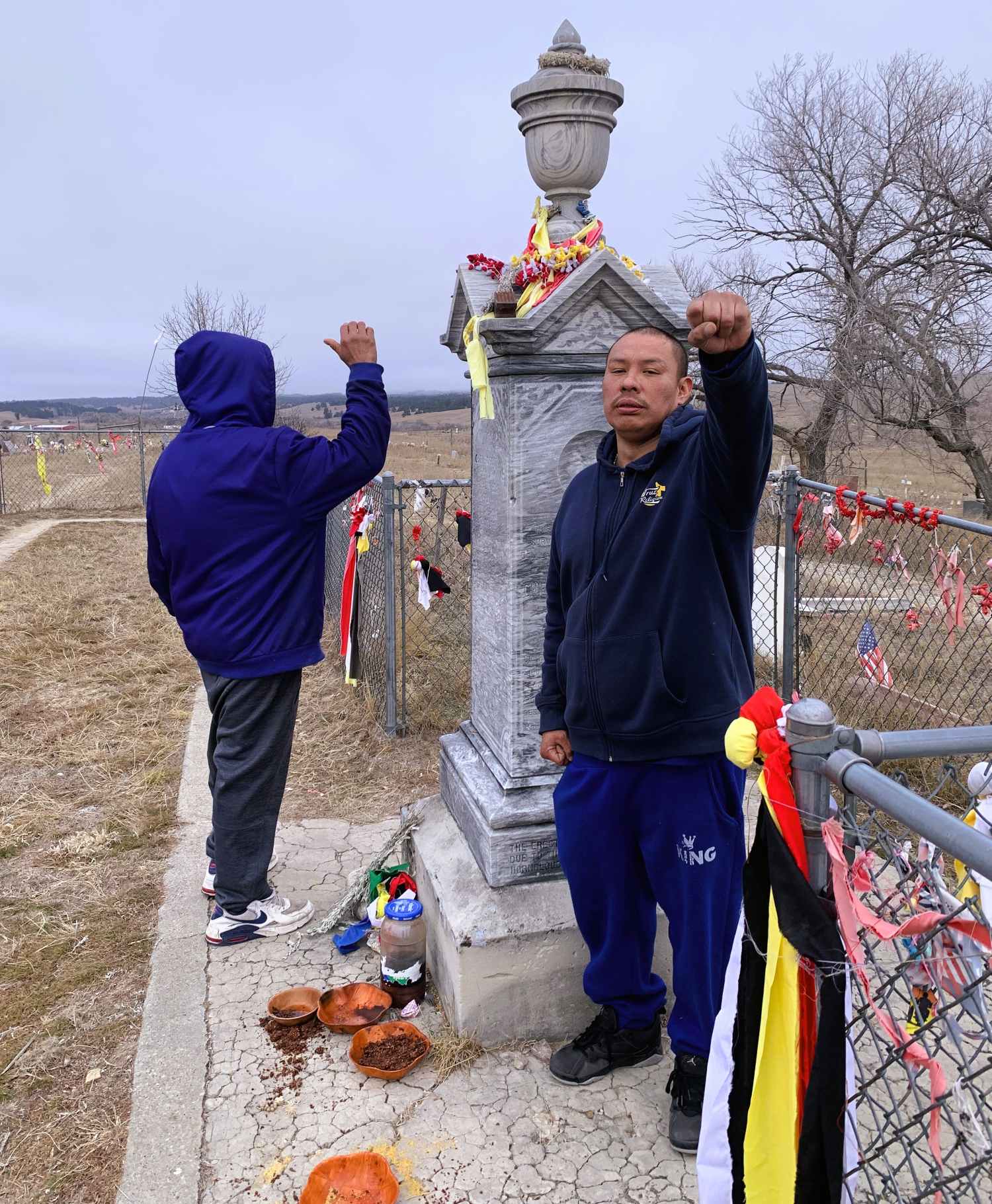
The Sioux believe that all things, including rivers, trees and animals, are ultimately connected as one spirit, Wakan Tanka or Great Spirit or Great Mystery. A man calls the wakan spirits, be they good or bad, with a hand gesture. I believe the older gentleman with his back to me holding his open hand up was calling the wakan spirits. The man standing with his fist said, “AIM”. AIM (American Indian Movement)
Tree Dressing
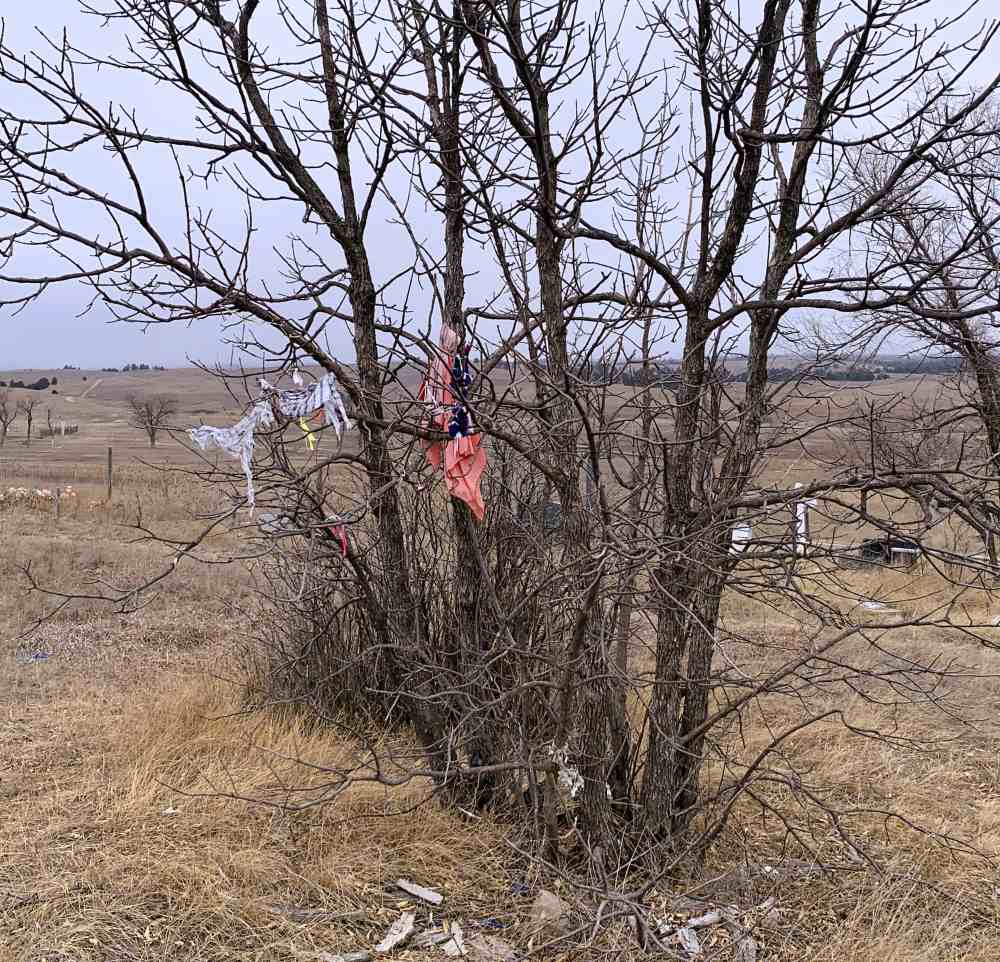
I need to mention the rags tied to trees and on the fence. My guide was about to explain this but didn’t finish. I think he said they were coms or cobs. After some digging, I found out that tying rags and ribbons to trees has been done since time immemorial, and in all parts of the world. For example, in Scotland they are called Clootie trees.
But I think these are prayer ties. A yellow cloth is a healing prayer, a red cloth is used for giving thanks, and a white or black cloth means to pray for ancestors. I’m not sure though and I haven’t been able to find what cob or com means.
The Spiritual Significance of Colors
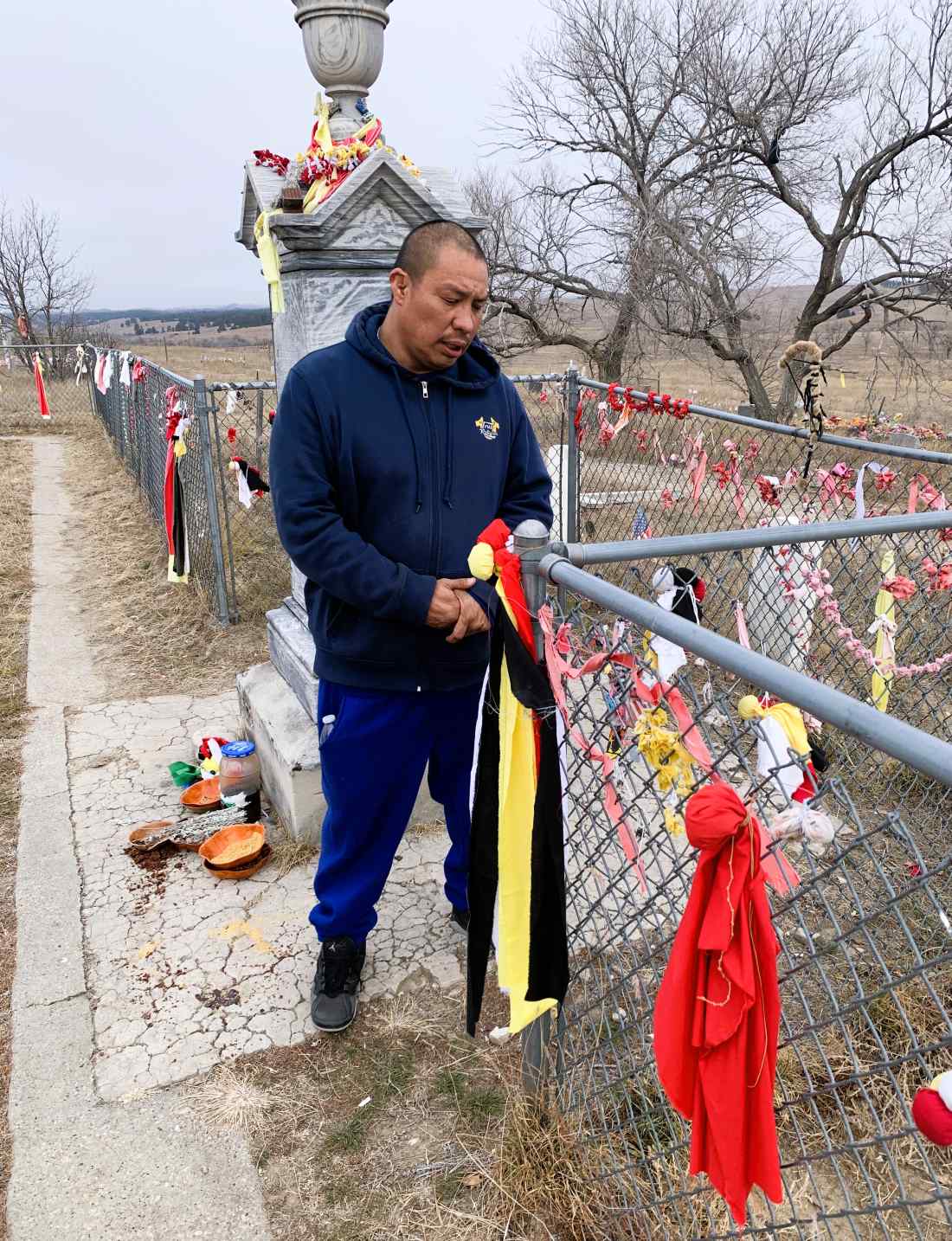
My friend gave me a sort of diplomatic explanation of the colors that play an essential role in Sioux beliefs. He said the red stood for Indians, yellow for Asians, black for African Americans and white for Caucasians. However, I did a little research and found out that these colors symbolize something more traditional.
Red means the earth and symbolizes strength and vitality. Yellow is the warmth of the sun and spirit of life. The Sioux believe that life is a great gift. Black represents the mysteries of the universe and the unknown. And white signifies purity, peace and the spirit world.
Crazy Horse
“My son is lying right over there,” said my cultural ambassador.
“Your son?!” I was surprised because he was still a young man.
“Yes, my son.”
“How old was he?”
“He was one year old.”
“How did he die?”
He shrugged his shoulders and said, “He just died.”
“I’m very sorry,” I said. He nodded his head. (Out of every 1000 live births on the reserve, 18 of those infants will not make it to their first birthday. That is 300% more than the national average.)
The older man said, “My people are all out there too.” He waved his arm over the prairie that spread out all around us for miles. I felt bad. In fact, I didn’t know what to say.
“What do you think of Crazy Horse?” I finally asked. The guide immediately put his hand on his heart, smiled and said, “He is our leader.”
“I heard his hair was curly and light brown. Was he half white?”
“No, no! His hair was zhi-zhi yes! I mean he had zhi-zhi hair, but that was because of the tribe he was from. His hair turned red in the summer and different colors in different seasons.” He suddenly stopped talking and both of them followed something with their eyes below us on the road. I turned around to see what it was. It was a black police SUV.
“Are they tribal police?” I asked.
“Feds!” blurted the younger man.
“Do you have tribal police?”
“Just Feds,” he said.
White Flag
The wind had picked up on top of that hill. I abruptly thanked them for everything and turned around to start back to the jeep. The older one came after me wanting to shake my hand again but I ignored him. Why didn’t I ask their names? I’m almost tempted to go back there and ask. I had so many questions.



0 Comments