Serendipitous Encounter in South Dakota
I’d read about the Oglala Sioux, the Plains Indians, Sitting Bull, the Ghost Dancers all of them and what happened to them. I also read Marie Sandoz’s story “Crazy Horse, The Strange Man of the Oglalas.” Any cowboy and Indian movie you watch generally depicts these people and this part of the country on the plains and in the hills.
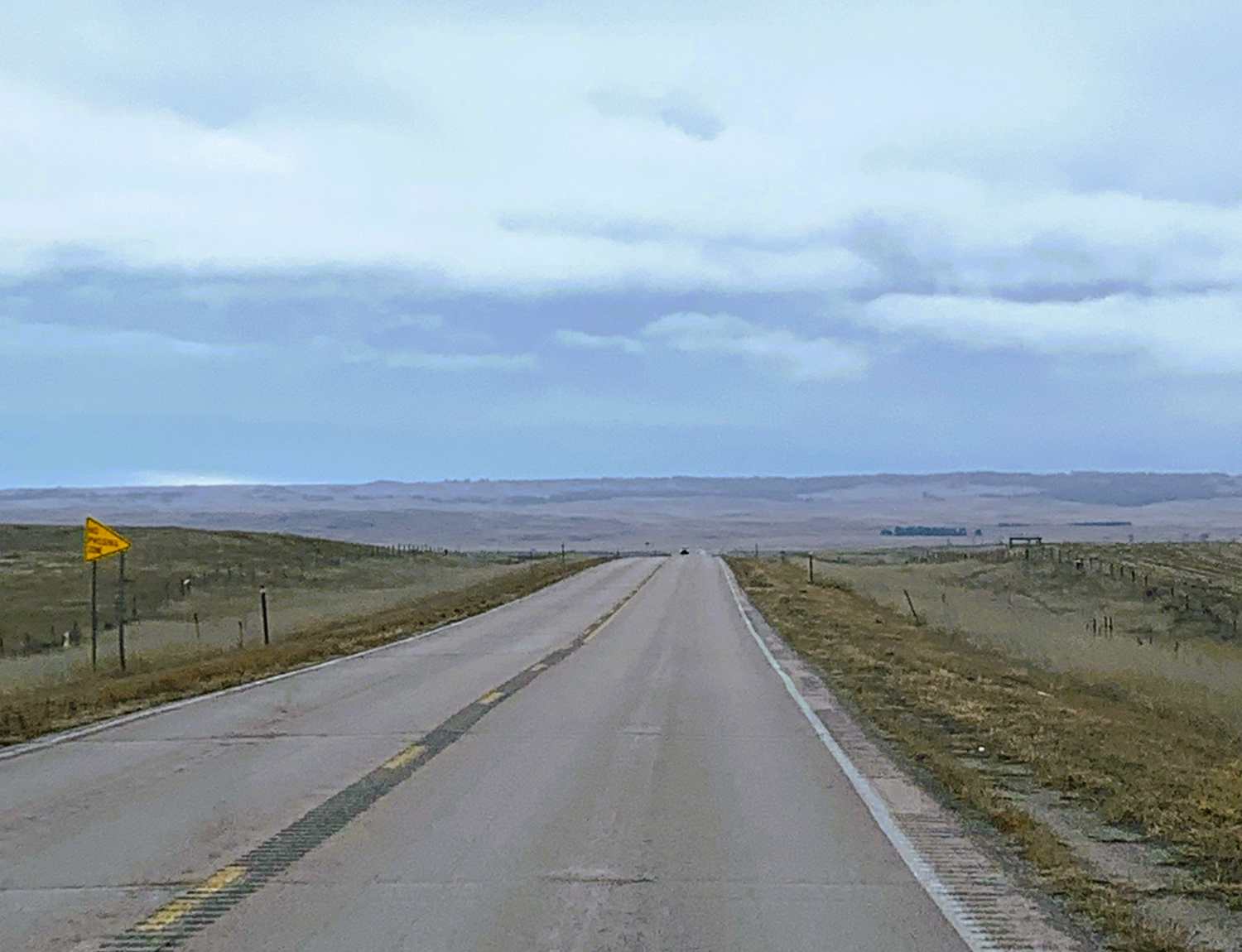
The sky was that typical northern white “leaden” sky. Leaden is a good word. It implies that the weight of the world is on you and it’s depressing. Frost lay everywhere. It wasn’t really snow. The fog had lifted. A large bright red sign with white lettering appeared on the left. We parked in front and started to read.
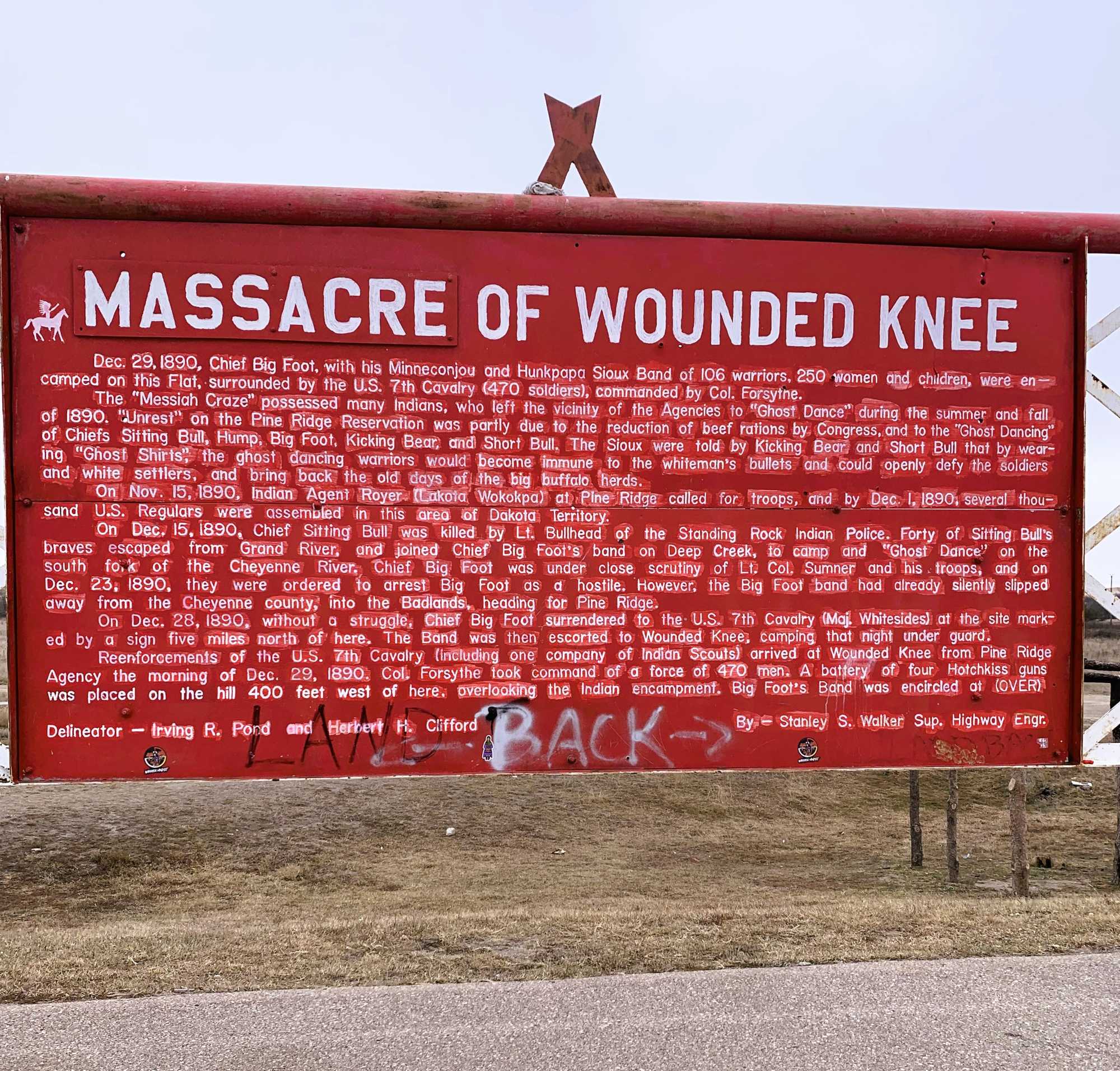
Wounded Knee
This was Wounded Knee! What a nice surprise. I was so intent on seeing the badlands that we casually stumbled onto the Pine Ridge Indian Reserve where the last big confrontation between the Lakota Sioux and US Calvary took place at Wounded Knee on December 29th, 1890. Between 150 and 300 men, but mostly women and children, were slaughtered. Thirty four soldiers were killed. If there ever was a people hard done by, it is the native Americans.
Only 5 days before we got there, on the anniversary of the confrontation, officials had gathered having signed a bill to not only ensure that 40 acres around the site would never be sold, but to officially name the area “Wounded Knee Massacre”. Although everyone has called it a massacre for decades. As for not selling this land, in1874 Lone Horn, a great orator among the Lakotas, had come back from Washington where he’d pleaded against selling the Black Hills.
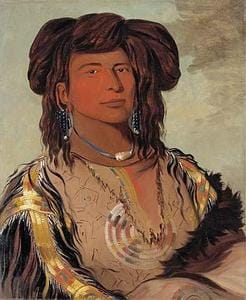
“One cannot sell the earth anymore than the sky or the four great directions.” But in this time of need his tongue had failed, for it seemed that the Black Hills were surely lost. Since he had come back he sat out behind the lodge on one old blanket, not eating or sleeping, as one already dead. It seemed that after his talking the whites had made the good noise, but when they spoke again they asked: “What do you want? What do you want the Great Father to give you?” It was then he seemed to die, shamed by their words before his own heart.”
Marie Sandoz, Crazy Horse Strange Man of the Oglalas, page 294
The Gold Rush in South Dakota
The Black Hills were seized in 1874 by the US government. Chief Lone Horn died in 1875.
What happened at Wounded Knee was the final nail in the coffin, and why the Sioux Indian heart is buried here. The Black Hills or Paha Sapa are the “heart of all that is ” and sacred to the Sioux. All they wanted was to be left alone in the Black Hills, their place of creation, and live their lives as they had done for millennia. Unfortunately in 1874, a white man found gold here, and soon the call went out: “There’s gold in them thar hills!”
Lieutenant Colonel George Armstrong Custer was sent to find out if this was really true. And the rest is one bloody history culminating in the cruel events at Wounded Knee that echo down through history right up to this day.
Highlight of the Whole Trip to South Dakota
As we sat reading the sign, a head popped up on the driver’s side. He said, “Hi, how are you?”
“Doing great, how are you?” I said.
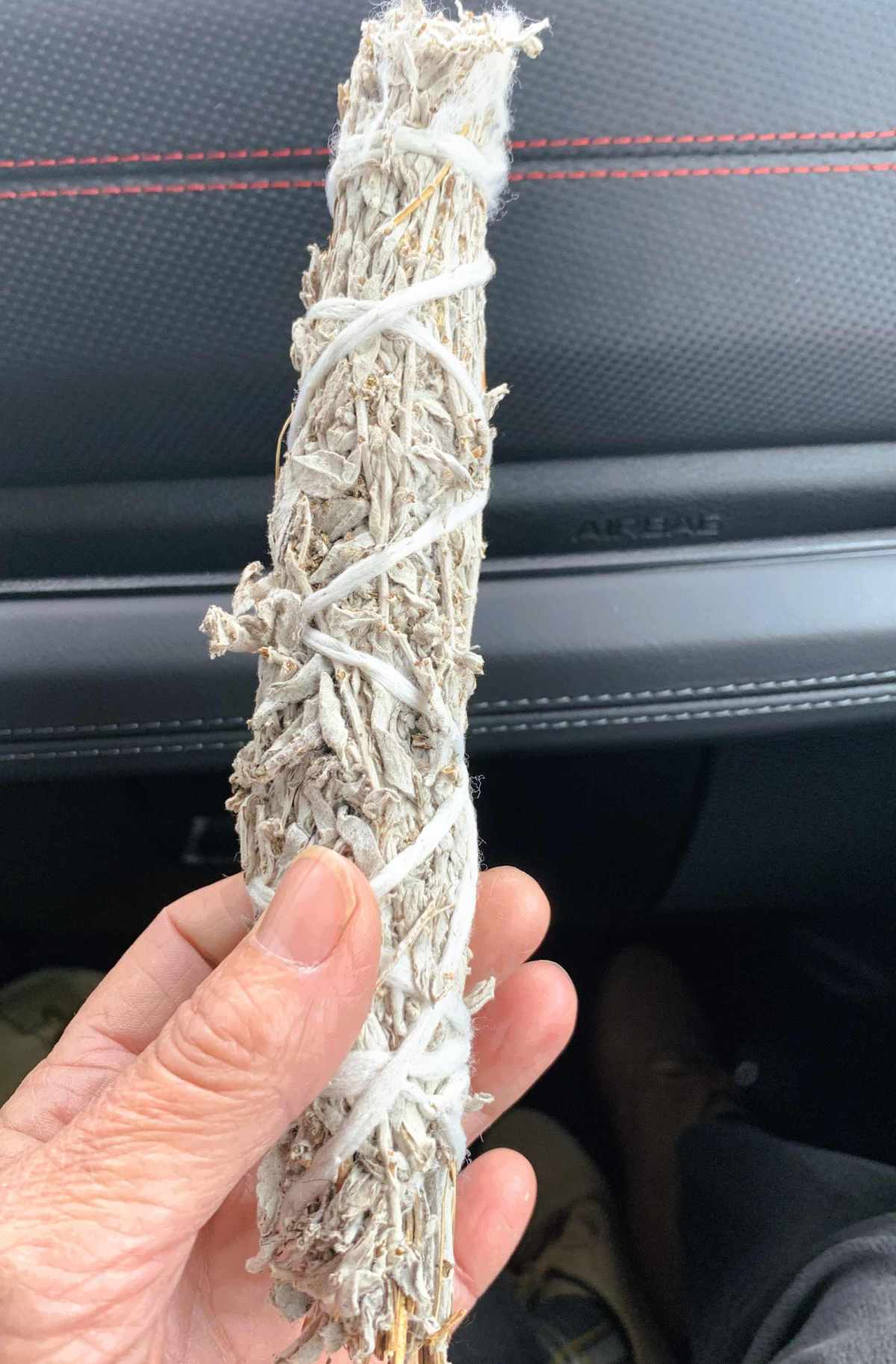
“Would you like to buy this sage for $20.00?” he asked.
“Ah, I don’t know if I have 20, but let me see what I have,” I said as I tried to hide the twenties in my wallet and just pick through the ones.
“I only have 6 ones,” I said.
“Okay, I’ll take 6.”
“Oh, wait I think I have some ones,” Maureen said. So she found 4 ones and we gave him 10. I later saw the same sage, a fraction smaller, selling for $3.50 at an Indian store. By this time another head had popped in the window.
“Have any snacks?” the second person asked.
“No, sorry,” I said. Although I did have half a bottle of rum. Alex said later I should’ve given it to them. I’d read about where the Indians came upon homesteaders, a man a woman and their baby. They asked for stuff and the white people gave it to them thinking everything was friendly, then the Indians shot the man in the face and told the woman to run east, not south, because they were fixing to rob the pioneers in the south, and they didn’t want her to warn them. Not that I thought a full on frontal assault was about to happen, but maybe it was a time-honored ruse.
Then There Were Three
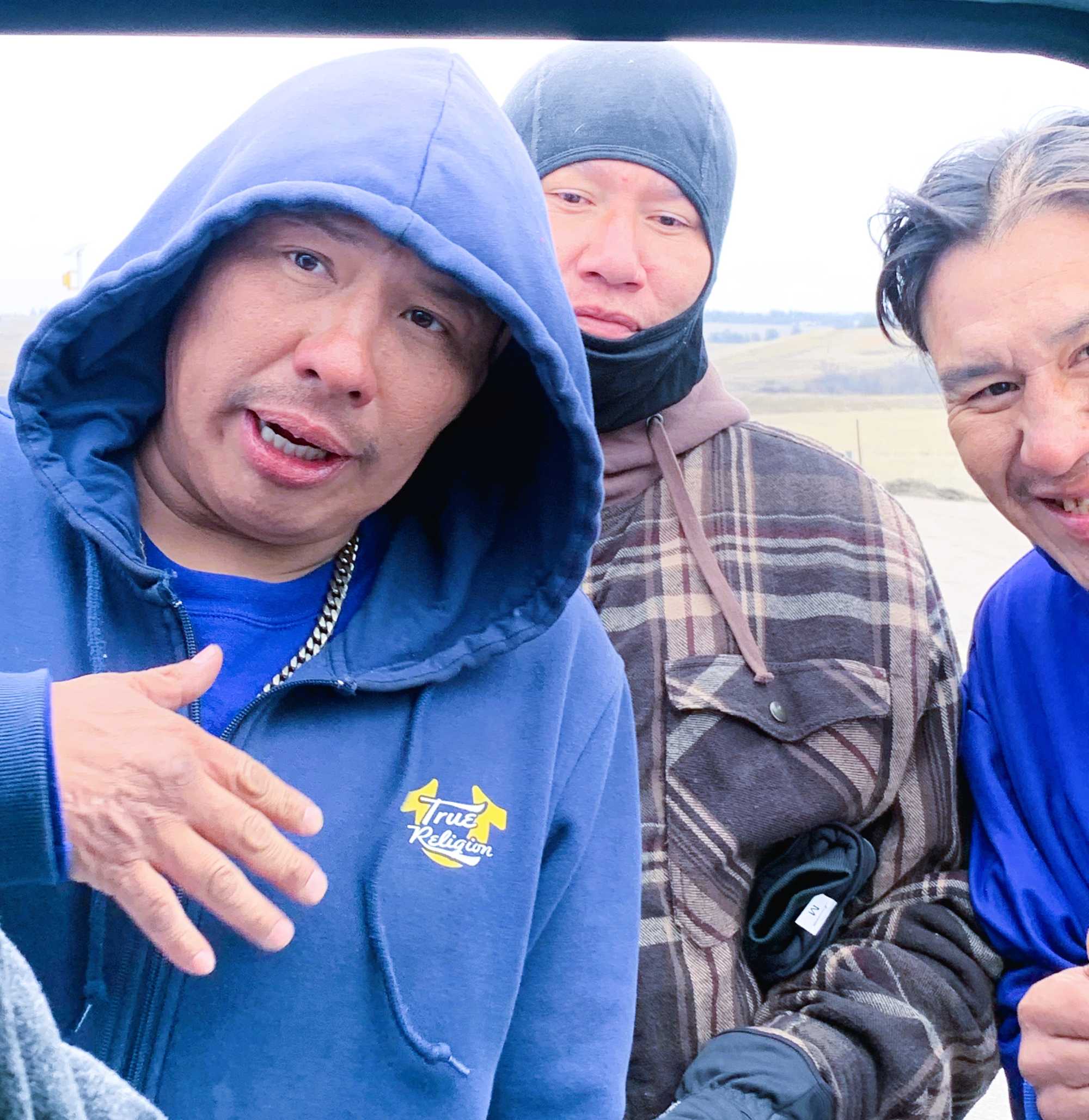
Suddenly there was a third person standing between the first two. I felt like I was at an animal park where you sit in your car while the wild animals roam free sometimes coming up to your car window. I couldn’t see them coming, and I didn’t know where they were coming from.
This is the thousand yard stare. I don’t know how to describe the expression on his face. Even if he is high, there is still a profound look of resignation or futility. I don’t know if I could feel a tenth of what he is feeling or not feel a tenth of what he is not feeling.
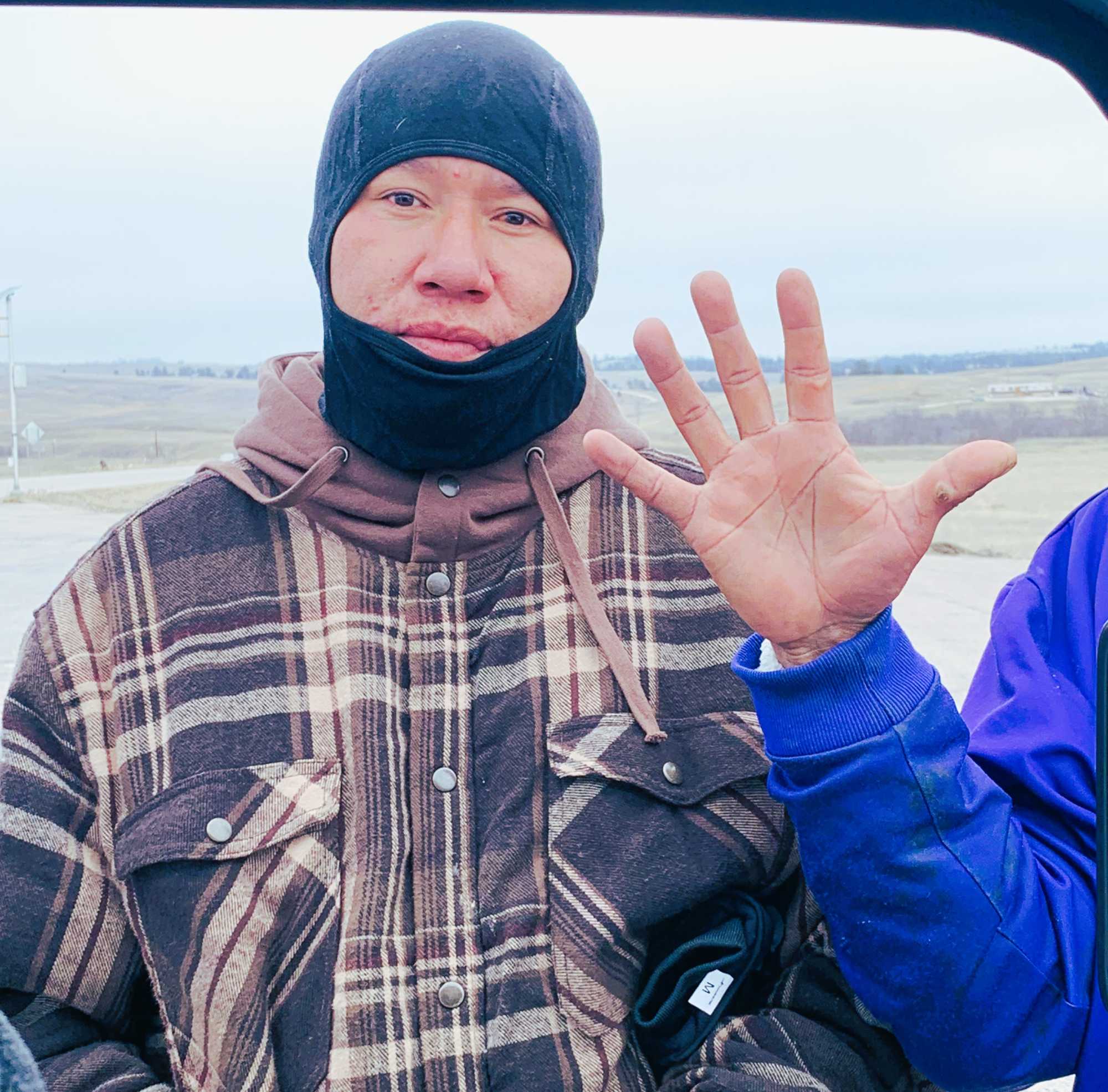
“If you go up there across the road that’s where the graveyard is,” said the first one.
“Oh, really?” That was interesting. I told Maureen to drive up there.

0 Comments